Pheasant’s Field Alarm: A Moment of Instinct in the English Countryside
Capturing a Moment of Instinct in the English Countryside
Living in the Staffordshire countryside, I’m surrounded by farms, hedgerows and open fields. It’s a landscape that’s constantly alive — not always in obvious ways, but through sound, movement and instinct. One of the sights I encounter almost daily is the pheasant, and in particular, that sudden, unmistakable moment known as the pheasant field alarm.
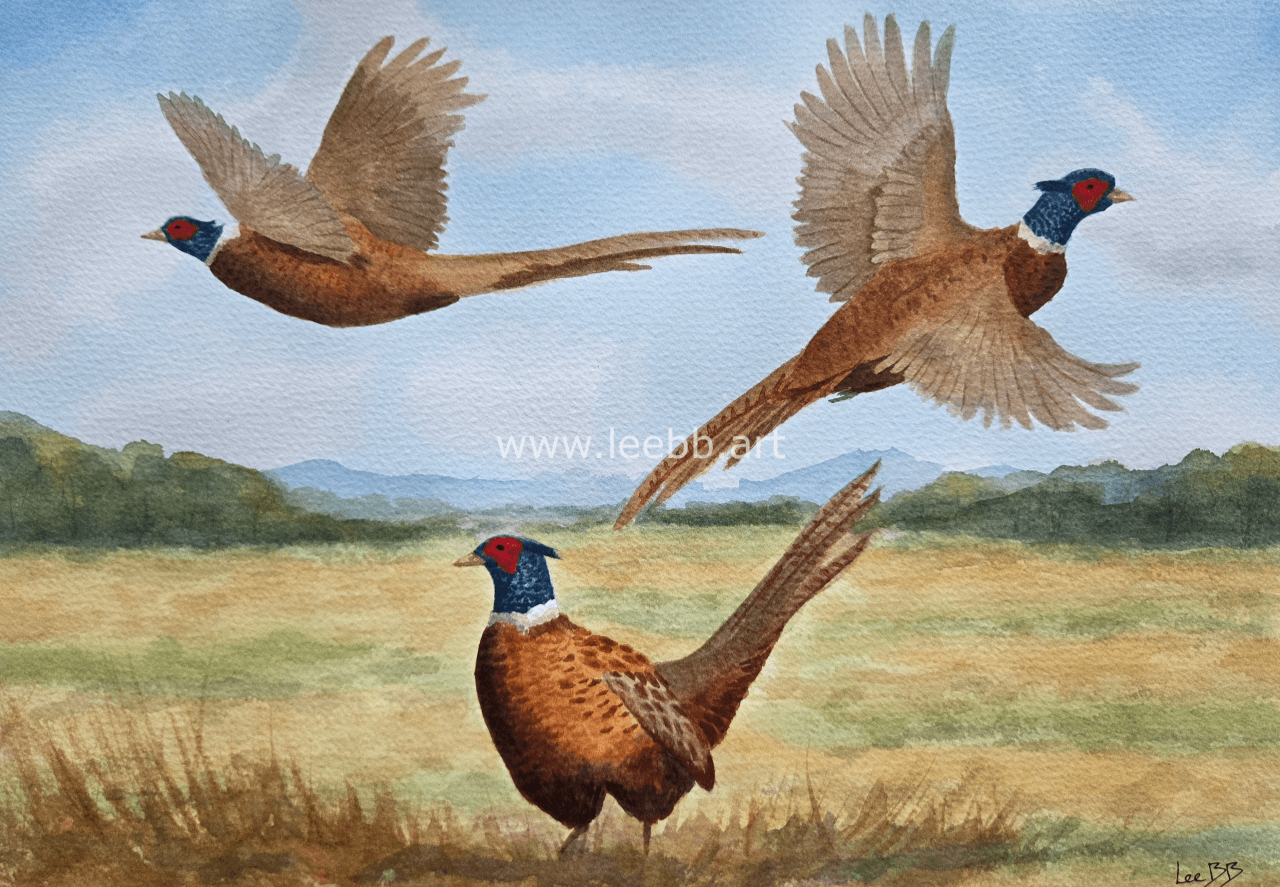
Pheasant’s Field Alarm was born of a desire to capture that exact split second — when calm is broken, wings beat the air, and the countryside briefly erupts with life.
The Inspiration: A Familiar Countryside Moment
If you spend any time in rural England, you’ll know the scene well. Pheasants lingering quietly in a field, half-hidden in the grass — until something startles them. A dog moving through a hedge, a distant shotgun, a sudden sound.
Then, without warning, they’re up.
I see this moment so often that it feels ingrained in the rhythm of countryside life. It’s part of what makes rural landscapes feel alive rather than static. I wanted to paint that instinctive reaction — not just the birds themselves, but the energy of that moment.
For this piece, I was also deeply inspired by John Constable. I’ve always admired how his paintings feel rooted in real places and real weather — expressive skies, working landscapes, and scenes that feel observed rather than staged. I wanted to bring a hint of that Constable-esque atmosphere into a contemporary wildlife scene.
The Scene: Movement Interrupted
Pheasant’s Field Alarm
Movement Interupted
The painting shows three pheasants set within a summer field under a cloudy blue sky.
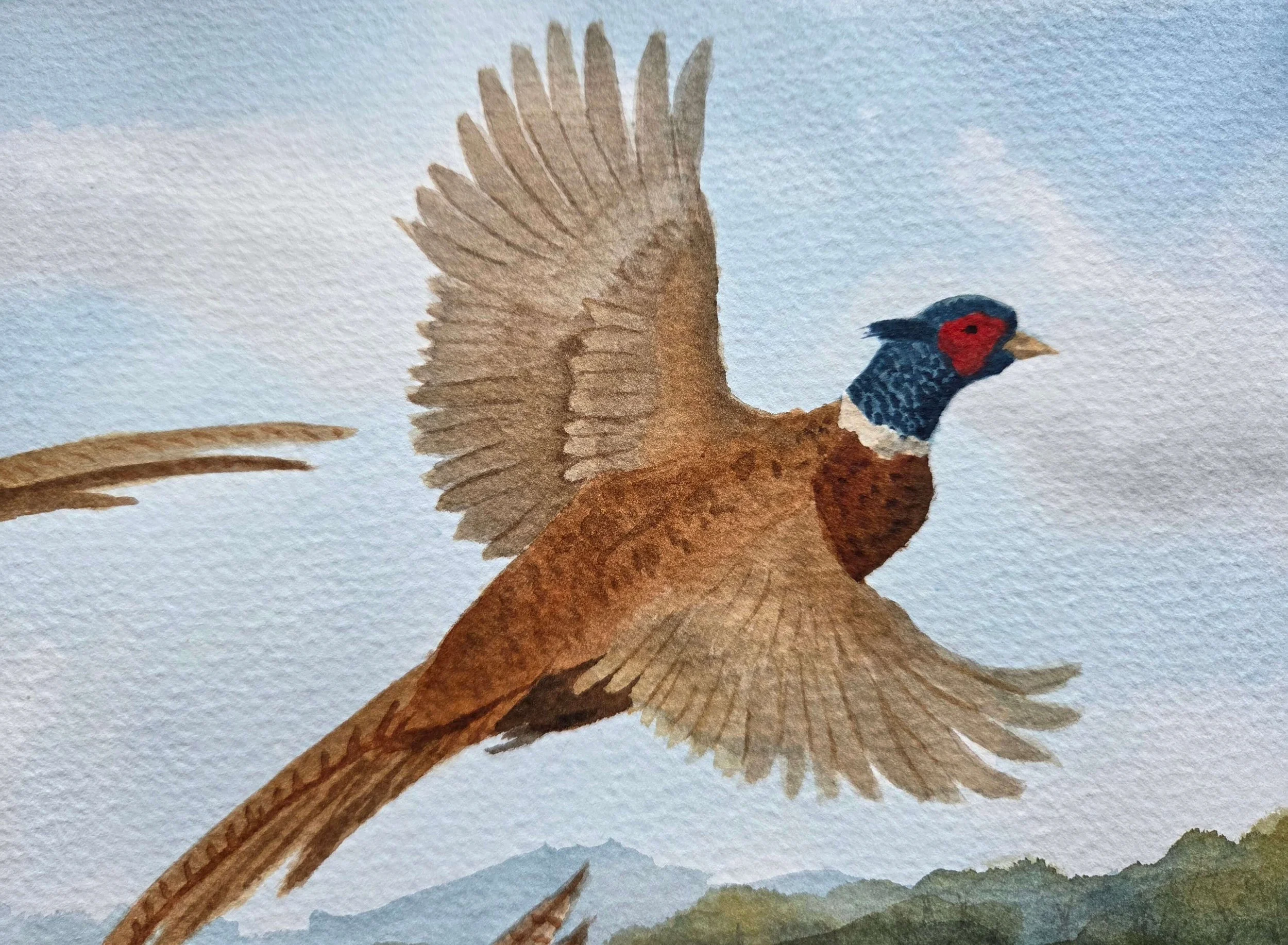
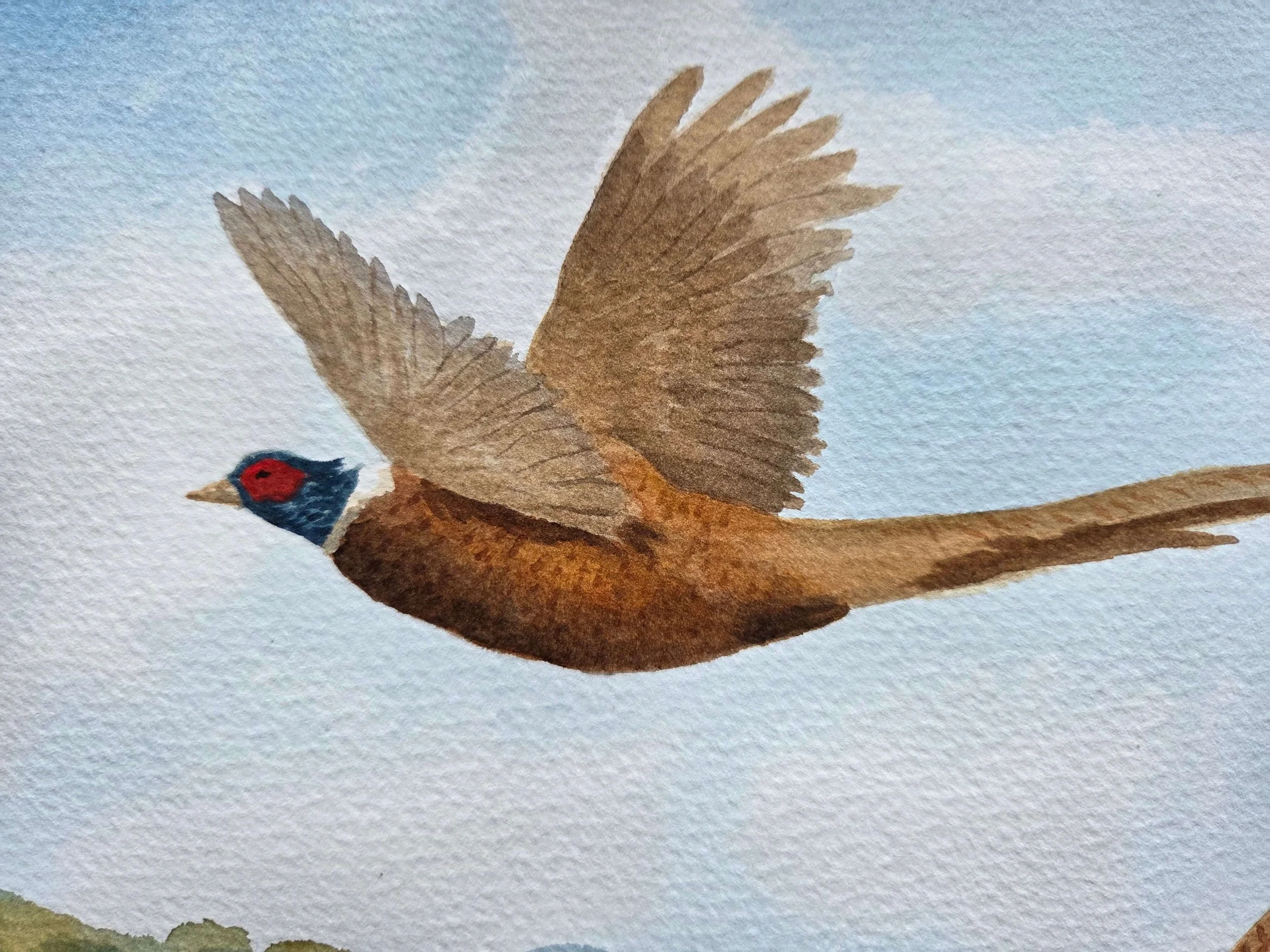
Two pheasants are already airborne — wings beating, startled, reacting instantly.
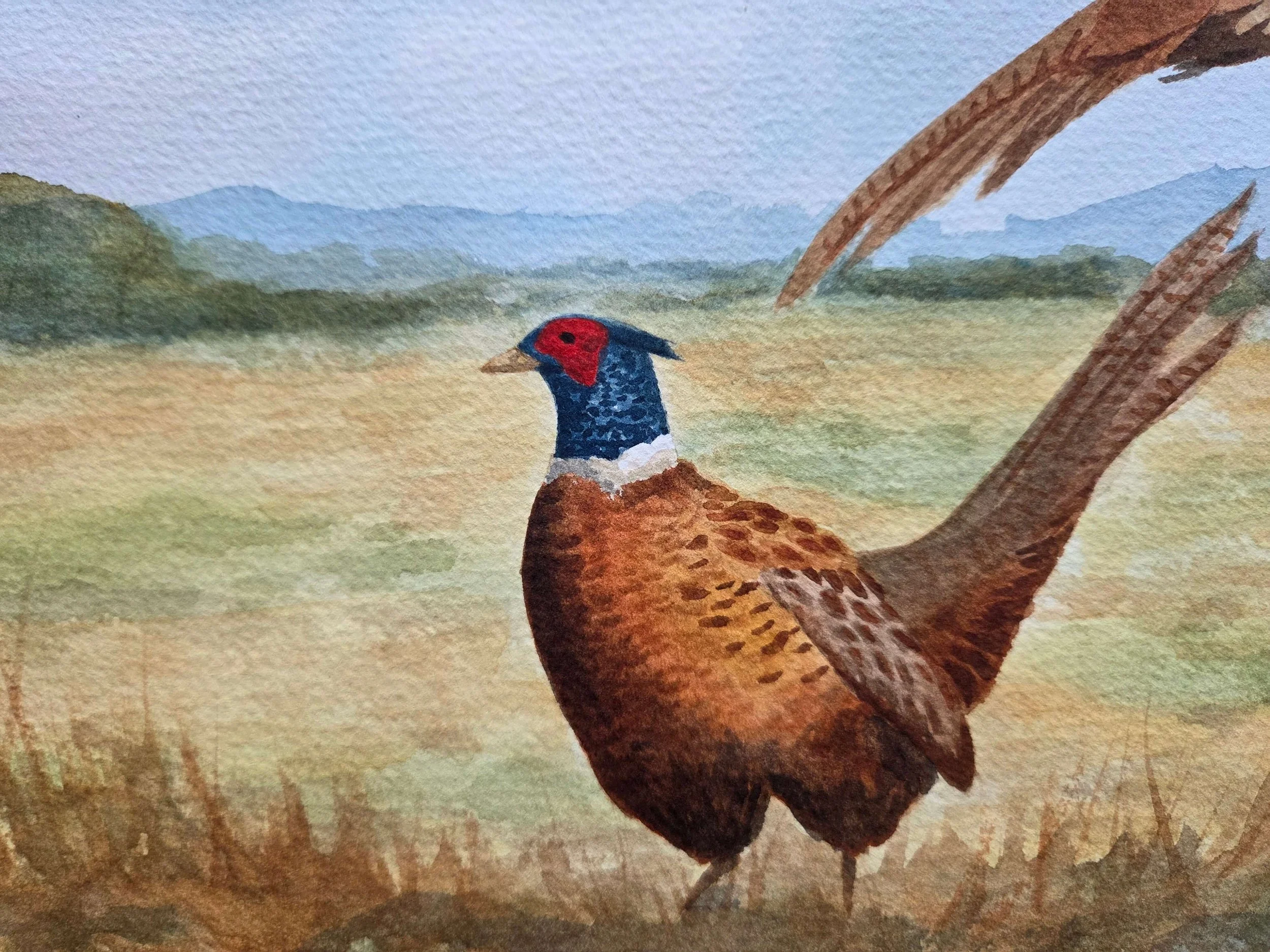
One remains on the ground, standing alert in the grass, frozen for a heartbeat before deciding whether to flee.
It’s late morning in summer. The light is clear but softened by cloud cover, and the field stretches back into the distance. Something unseen has disturbed the calm — perhaps a dog, maybe a farmer’s shotgun — but that ambiguity is intentional.
The viewer arrives just after the moment of disturbance, witnessing the reaction rather than the cause.
Research & Preparation
Although the scene feels spontaneous, a great deal of preparation went into it. I spent time researching pheasants in different positions and angles, studying:
Their posture when alert
The mechanics of their wings in flight
Their colouration and feather patterns
Their distinctive presence and personality
Rather than copying a single reference image, I brought together elements from multiple sources. This allowed me to design a composition that felt natural while still serving the narrative of the painting.
The pheasants take centre stage, but the surrounding landscape is just as important — grounding them in a believable, lived-in environment.
The Creative Process
Pheasant’s Field Alarm
Capturing movement and creating depth.
Once I was happy with the concept, I began by sketching the full scene, ensuring the pheasants held the viewer’s attention immediately. Movement was critical — without it, the painting would lose its meaning.
Two key challenges shaped the process:
Capturing Movement
The raised wings, the sudden lift-off, and the contrast between motion and stillness were essential. The two flying pheasants had to feel dynamic, while the grounded bird needed tension — that split second of alertness before action.
Creating Depth
I wanted the viewer’s eye to move beyond the birds and into the field behind them. The landscape isn’t just a backdrop — it provides context, space, and atmosphere. You see the pheasants first, but then your gaze drifts into the distance, much like it would in real life.
For this piece, I chose to work purely in watercolour. My previous paintings had involved mixed media, and I felt this scene deserved a more traditional, restrained approach. Watercolour allowed me to keep the painting light, expressive, and true to the countryside mood I was aiming for.
Materials & Artwork Details
Title: Pheasant’s Field Alarm
Medium: Watercolour
Paper: 100% cotton, 300gsm rough watercolour paper
Size: 10" × 14"
Year: 2025
Availability: Original painting available - Prints also available
What “Field Alarm” Means to Me
Pheasant’s Field Alarm
Pheasant’s are aplenty in the countryside where I live.
The phrase field alarm is deeply tied to the English countryside. It’s a sound, a movement, a reaction — a reminder that the land is shared with wildlife that is constantly alert to its surroundings.
For me, it symbolises what brings the countryside to life. It’s those small, fleeting moments that you don’t always notice unless you’re paying attention.
I hope viewers connect with this painting either through their own memories — walks through fields, sudden bursts of wings — or simply through that quiet happiness that comes from thinking about rural landscapes.
Display & Connection
Pheasant’s Field Alarm works beautifully as a statement centrepiece, whether in a home or office. It has enough movement and energy to draw attention, while still retaining a calm, natural palette.
If you love the countryside, wildlife, or paintings that feel rooted in real places and lived experience, this piece is likely to resonate. It’s a moment many of us have witnessed — now captured and held still on paper.
Final Thoughts
This painting is my way of honouring a moment that’s easy to overlook, yet deeply characteristic of rural England. It’s about instinct, landscape, and the subtle drama that exists in everyday countryside life.
If you’ve ever paused during a walk as pheasants burst from a field beside you, then you already understand Pheasant’s Field Alarm.